The Surprising Link Between Mouth Breathing During Sleep and Your Health
Published: October 24, 2019 | Updated: March 13, 2026
This article was developed with the support of Sunstar’s Scientific Affairs team.

Mouth breathing at night can contribute to sleep fragmentation and systemic health risks. Unlike nasal breathing, mouth breathing lacks natural filtration, leading to tissue irritation and airway collapse (sleep apnea). This triggers a "chain reaction" in the body where drops in blood oxygen levels increase the long-term risk of high blood pressure, heart disease, cognitive decline, and diabetes [1].
Within the oral environment, melatonin is widely known for regulating the body’s circadian rhythm, but research shows it also plays important antioxidant and anti-inflammatory roles. In certain patient populations, such as those with oral cancer, melatonin has been detected in saliva and found to be significantly different from those in healthy individuals [2]. This suggests that oral fluids can reflect broader biological processes occurring throughout the body.
Studies examining patients with oral diseases have observed significantly poorer sleep quality compared with healthy individuals. This finding reinforces the close relationship between oral health and sleep regulation. Researchers suggest that salivary melatonin may serve as a promising non-invasive biomarker for detecting early biological changes in the oral cavity, further supporting the concept that the mouth can provide valuable insights into overall health [2].
Brief Summary: The Mouth-Sleep Connection
Before diving into the details, here’s a snapshot of the main ways mouth health and sleep interact. Consider this a roadmap of the key connections we’ll explore in depth throughout the article:
- The airway connection: Mouth breathing bypasses the nose’s natural filtering system. This can lead to physical blockages in the airway that cause "micro-choking" (apnea), putting unnecessary strain on your heart and oxygen levels [1].
- The protective shield: Without enough saliva production to wash away acids, your mouth’s chemistry changes. Once it hits a certain acidity level (pH 5.5), your tooth enamel begins to soften and dissolve. This process can lead to more rapid tooth decay [3].
- The nightly repair cycle: During deep sleep, your immune system "trains" specialized cells to patrol your body. Without this rest, your body can stay in a state of constant inflammation, making it much harder for tissues, including the gums, to heal [4].
- Approaches to protect your mouth and sleep: Managing these issues involves a combination of custom dental devices, specialized hydration (such as GUM ® Hydral ®), and simple lifestyle changes that help keep your airway open and your mouth protected [1] [5] [6].
Now that you know the key connections, let’s explore how nasal and mouth breathing differ and why it matters for your health.
At a Glance: Nasal vs. Mouth Breathing
| Feature | Nasal Breathing (Healthy) | Mouth Breathing (At-Risk) |
| Air Filtration | Filters out dust, allergens, and germs [1]. | Bypasses filters; irritates throat tissues [1]. |
| Oral Humidity | Helps warm and moist air before reaching lungs [1] | Causes mouth and throat to dry [1]. |
| Acidity (pH) | Maintains a neutral, safe pH level [3]. | Can drop below pH 5.5 (Acidic) [3] [7]. |
| Sleep Quality | Helps maintain open airways, preventing fragmented, less restorative sleep [4]. | Linked to snoring and airway blockages [1] [5]. |
Understanding these connections is the first step toward better rest. However, to fix the cycle, we first need to look at what actually qualifies as a "sleep disturbance" in our daily lives.
Defining Sleep Disturbance: More Than Just Reduced Sleep
Everybody experiences a poor night’s sleep now and then, along with the fatigue and lack of focus that follows. However, when these issues become structural, they do more than just increase the risk of accidents; they act as a catalyst for serious medical conditions, including obesity, heart disease, and diabetes. Oral health is a central component of this systemic puzzle. Research confirms that sleep quality is deeply intertwined with the health of the mouth [8]. Many common sleep disruptions, from fragmented rest to systemic inflammation, often begin with oral triggers like mouth breathing and physical blockages in the airway [9].
To clarify what counts as a “sleep disturbance”: it’s a broad medical term for sleep irregularities, not just insufficient sleep, that disrupts the quality, continuity or restorative flow of your rest [10]. Clinically, sleep disturbances are often identified by how they interrupt your rest. According to medical research [9], these disruptions generally fall into four categories:
- Insomnias: The inability to fall asleep or stay asleep, often linked to stress or underlying medical issues.
- Hypersomnias: Excessive daytime sleepiness, often related to insufficient sleep or sleep fragmentation (waking up several times a night due to breathing issues like sleep apnea or movement disorders like bruxism).
- Parasomnias: Unusual events that happen while you sleep, such as sleepwalking, night terrors, or bruxism (teeth grinding), which can cause dental damage and jaw pain.
- Sleep–Wake Schedule Disorders: When your internal "body clock" (circadian rhythm) is out of sync with your environment, common in shift workers or those with jet lag.
Your oral health is a key factor in these sleep categories, as conditions like teeth grinding or airway blockages contributors to broken sleep.
How Exactly Oral Triggers Mess With Your Sleep Cycle
In dentistry, sleep problems are usually either obstructive, where tissues physically block the airway [1] [5], or reactive, which is your body’s way of coping with a problem, such as grinding your teeth to keep the airway open [6]. Often, you’ll experience 'micro-awakenings', brief moments where your brain jumps into action to restart your breathing or respond to jaw stress, even if you don't remember waking up [9].
Let’s break down how common oral issues disrupt your sleep and why you should care.
Obstructive Sleep Apnea (OSA): When Your Mouth Blocks Your Healing Sleep
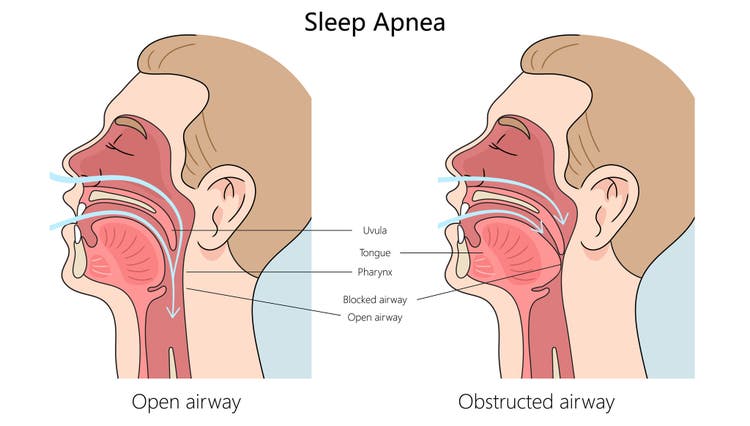
One of the most common sleep disorders with significant oral health implications is Obstructive Sleep Apnea (OSA). This occurs when your throat muscles and soft palate relax too much, physically blocking your airway [1] [5]. When oxygen levels drop, your brain enters "rescue mode," trying to reopen your airways, waking you up just long enough to restart breathing. While you may not remember these 'micro-awakenings', they fragment your sleep and prevent you from reaching the deep, restorative phases needed for immune health and repair. As a result, you may feel exhausted the next day [9] [5].
Managing OSA: Airway and Lifestyle Strategies
According to the Mayo Clinic [11], the goal of managing sleep apnea is to keep the airway open during sleep so that breathing and oxygen levels remain steady. Common approaches include:
- CPAP therapy: The most common and reliable method. A Continuous Positive Airway Pressure (CPAP) machine uses a mask to provide air pressure that is slightly greater than the surrounding air, which keeps your upper airway passages open to prevent apnea and snoring.
- Oral appliances: For some patients, dental devices are an effective alternative. These are designed to keep your throat open by bringing your jaw forward, which can sometimes relieve snoring and mild obstructive sleep apnea.
- Lifestyle changes: In many cases, doctors recommend losing weight, exercising and avoiding alcohol or medications that relax the throat muscles.
- Sleep position: Sleeping on your back (supine) can cause your tongue and soft palate to relax against the back of your throat. Adjusting your position to sleep on your side can help keep the airway clear.
Why Dry Mouth (Xerostomia) is Ruining Your Sleep Cycle
You might not realize your dry mouth can contribute to sleep fragmentation. When you breathe through your mouth at night or live with conditions like diabetes or Sjögren’s syndrome, your mouth can become uncomfortably dry, waking you multiple times throughout the night.
Beyond discomfort, mouth breathing can increase the risk of tooth demineralization by lowering oral pH levels (a measure of how acidic or alkaline the environment is) [7]. Saliva is the body's natural defense against acid; without it, the mouth environment becomes more vulnerable to acid [7]. According to research [3], once oral pH hits the "critical threshold" of 5.5, tooth enamel begins to dissolve. This makes dry mouth a significant risk factor for increased cavities and gum disease, rather than just a minor discomfort [12].
While drinking water may provide temporary relief, it is often insufficient in more severe cases, which can lead to ongoing sleep disruption. Longer-lasting solutions, such as the GUM ® Hydral ® product line, may help people experiencing dry mouth maintain oral moisture and sleep more comfortably.
Sleep Bruxism: Your Body’s Rescue Response
Sleep bruxism involves involuntary, rhythmic contractions of the jaw muscles and teeth grinding during sleep [6]. Far from being just a nuisance, it is a clinically significant condition that can directly impact dental health and overall quality of life.
A Reactive Coping Mechanism
Bruxism is often considered a reactive response associated with micro-arousals, which are brief increases in brain activity occurring during sleep [6]. It is classified as a sleep-related movement disorder regulated by the central nervous system [6].
Interestingly, approximately 50% of adults with obstructive sleep apnea also experience sleep bruxism. Some researchers suggest that grinding may serve as a protective function, acting as a response that helps stabilize or reopen a partially obstructed airway during respiratory-related arousals [6].
The effects of clenching extend beyond the teeth. Repeated muscle contractions may lead to:
- Temporal headaches and morning jaw fatigue
- Restricted motion of the temporomandibular joint (TMJ, the hinge connecting your jawbone to your skull that allows chewing and talking)
- Referred muscular tension manifesting as neck pain or stiffness [6]
Strategies for Managing bruxism
Managing bruxism requires a multifactorial approach aimed at preventing dental damage while reducing symptoms. Clinical research highlights several strategies:
- Counseling and lifestyle modifications: Managing stress, improving sleep hygiene and avoiding alcohol or caffeine before bedtime.
- Oral devices: Using custom-fitted occlusal splints (preferably hard acrylic resin) to protect teeth from mechanical wear [6].
- Mandibular advancement devices: For patients presenting both sleep apnea and bruxism, these devices increase airway volume while helping reduce bruxism-related muscle activity [6].
Your Mouth: A Gateway to Whole-Body Health
Building on what we introduced earlier, your mouth is more than the starting point of digestion; it is a gateway to the rest of your body. Every day, hundreds of species of bacteria live inside your oral environment, most of which are harmless when kept under control through good oral care and healthy saliva flow [13].
However, when saliva flow is reduced, often due to mouth breathing, this balance can become disrupted [14]. Because the mouth is the entry point to both the respiratory and digestive tracts, harmful bacteria and the inflammation they trigger can spread through the bloodstream and influence your health far beyond the oral cavity [13].
The Domino Effect: The Oral-Sleep-Systemic Pathway
Scientific research [4] suggests that chronic oral inflammation creates a "two-way street" with systemic health through the oral-sleep-systemic pathway. This chain reaction impacts three primary areas:
- Cardiovascular stress: Sleep-disordered breathing causes sudden drops in blood oxygen levels, forcing the heart to work harder. This chronic strain increases the risk of hypertension (high blood pressure), heart attack, and arrhythmia (irregular heartbeats) [5].
- The diabetes connection: Gum disease makes it harder for your body to control blood sugar [15], and sleep loss worsens this effect [16]. This creates a dangerous cycle. While the bacteria in your mouth may be the same as anyone else's, diabetes causes your body to have a much more intense inflammatory response to them. This can result in a faster loss of the tissue supporting your teeth, while simultaneously making it harder to meet your blood sugar targets [17] [15].
- Immune “updates”: During deep sleep, specifically Slow Wave Sleep (SWS), your immune system performs a critical "update" known as immunological memory consolidation [4]. While you rest, your body creates a pro-inflammatory environment that supports communication between cells that detect germs and specialized immune cells that remember how to fight them [4].
Once this process is strengthened, these immune cells circulate throughout the body, including your gums. Without enough rest, this redistribution is less efficient and low-grade inflammation can increase. This may make it harder for the body to regulate inflammation and repair tissues like your periodontal tissues [4]. Even with a good brushing routine, ongoing sleep disruption can make it more difficult for the mouth to fully recover.
Habits That May Help You get Deep Sleep and Stronger Teeth
If you want to wake up refreshed and protect your oral and overall health, here are the steps you can start taking tonight to optimize your sleep efficiency:
- Hydrate before bed: Drink water in the evening to reduce mouth dryness, but limit your intake right before sleep so you’re not waking up for bathroom trips.
- Consider a humidifier or air purifier for pets: Adding moisture and clean air to the bedroom can help reduce nasal dryness and discomfort [1]. For homes with pets, products like the QAIS-air-®, help eliminate pet odors and allergens, creating a healthier sleep environment.
- Clean interdentally every night: Interdental cleaning helps remove bacteria and food particles that thrive in a dry mouth, which helps prevent gum disease before it starts [12].
- Deep breathing for sleep: While you can't consciously control your breathing while asleep, you can 'retrain' your respiratory system during the day to be more efficient at night. The American Lung Association recommends two breathing exercises that improve airflow: Pursed Lip Breathing (inhaling through the nose, exhaling slowly through pursed lips) and Belly Breathing (breathing that expands the belly rather than the chest) to strengthen the diaphragm [18] [19].
- Maintain the best sleep posture: Sleep on your side with your head slightly elevated to reduce snoring and prevent airway collapse [20].
Want to turn these tips into lasting routines? Our article How to Develop Healthy Habits provides practical strategies and step-by-step guidance for building daily habits that support your overall wellbeing, including oral health.
A holistic approach to ensure total overall well-being
People are often surprised to learn that dentists are sometimes the first to identify signs of an underlying sleep disorder. Indicators such as tooth wear, gum inflammation, or a dry, red throat may suggest repeated awakenings during the night. Addressing conditions like bruxism or dry mouth early does more than protecting your teeth; it may also help reduce future risks linked to cardiovascular disease, diabetes and mental health challenges.
Because sleep and oral health are strongly interconnected, medical and dental professionals should work together closely. Through regular visits and close patient contact, the dental office could be the ideal setting to identify sleeping problems at an early stage. On the other hand, medical professionals should seek the advice of dental professionals if they suspect that the poor sleep of a patient has an underlying oral health-related cause. As is often the case, a patient with sleeping problems could benefit the most from a holistic approach.
Final Words: ‘‘Mouth Breathing During Sleep’’ - Your Health Checklist
Take a moment to check in with yourself (or a loved one):
- Do you wake up with a very dry mouth or a tacky, sticky feeling?
- Do you experience frequent morning headaches or a tight, sore jaw?
- Has a partner noticed that you snore loudly or stop breathing momentarily?
- Do you feel tired, even after a full night’s sleep?
- Are your teeth strangely worn down or flattened?
If you answered "yes" to two or more, it’s time for a sleep and oral health check-up. Your dental professional can guide you on the next steps, and products like GUM ® Hydral ® for dry mouth can help soothe discomfort overnight.
About Sunstar Healthy Thinking
This article was developed with the support of Sunstar’s Scientific Affairs team. For over 90 years, Sunstar has been a pioneer in the oral-systemic link, dedicated to the philosophy that a healthy mouth is the foundation for a healthy body. Our research, including the Global Healthy Thinking Report, utilizes large-scale consumer data and clinical insights to bridge the gap between dentistry and total-body wellness.
Frequently Asked Questions
- Is mouth breathing during sleep harmful? Yes. Mouth breathing dries out oral tissues and irritates the throat, leading to restless sleep. Over time, it can contribute to serious issues like sleep apnea, cavities, and gum inflammation, all of which impact your overall health [1].
- Why does mouth breathing cause dry mouth at night? When you breathe through your mouth, your saliva evaporates. Saliva is your mouth's natural protector; without it, your oral environment may become more acidic [7]. Once it hits the "danger zone" of pH 5.5, your enamel begins to dissolve, increasing the risk of cavities and gum disease [3].
- Can dentists detect sleep problems? Absolutely, because you see your dentist regularly, they are often the first to notice warning signs like tooth wear from grinding (bruxism), inflamed gums, or a dry, irritated throat—all of which are "red flags" for sleep disorders [1] [9].
- How are sleep apnea and oral health connected? Sleep apnea happens when the tissues in your airway collapse, cutting off oxygen. Factors like the position of your jaw, the posture of your tongue, and even nighttime teeth grinding can all contribute to these physical blockages and disrupted sleep [9] [5].
- Can improving my oral health really help me sleep better? Yes. By managing dry mouth, gum disease, and grinding, you reduce the discomfort that causes nighttime interruptions. Keeping your mouth healthy and hydrated helps maintain the steady breathing needed for deep, restorative sleep cycles [6].
- When should I see a professional about mouth breathing? You should speak with a dental or medical professional if you regularly wake up with a dry mouth, morning headaches, jaw pain, or if you feel exhausted even after a full night's sleep. Early help can prevent more serious heart and dental issues later on [1] [5].
For more data on global hygiene habits and clinical trends, view our largest oral health statistics report.
Bibliography
[1] Carra MC, Balagny P, Bouchard P. Sleep and periodontal health. Periodontology 2000 [Internet]. 2024 Sep 4;96(1):42–73. Available from: https://doi.org/10.1111/prd.12611
[2] Salarić I, Karmelić I, Lovrić J, Baždarić K, Rožman M, Čvrljević I, et al. Salivary melatonin in oral squamous cell carcinoma patients. Scientific Reports [Internet]. 2021 Jun 24;11(1):13201. Available from: https://www.ncbi.nlm.nih.gov/pmc/articles/PMC8225878/
[3] Harper RA, Shelton RM, James JD, Salvati E, Besnard C, Korsunsky AM, et al. Acid-induced demineralisation of human enamel as a function of time and pH observed using X-ray and polarised light imaging. Acta Biomaterialia [Internet]. 2020 May 10;120:240–8. Available from: https://pubmed.ncbi.nlm.nih.gov/32438107/
[4] Besedovsky L, Lange T, Born J. Sleep and immune function. Pflügers Archiv - European Journal of Physiology [Internet]. 2011 Nov 9;463(1):121–37. Available from: https://pmc.ncbi.nlm.nih.gov/articles/PMC3256323/
[5] Sleep apnea - Symptoms and causes [Internet]. Mayo Clinic. Available from: https://www.mayoclinic.org/diseases-conditions/sleep-apnea/symptoms-causes/syc-20377631
[6] Lal SJ, Sankari A, Weber KK DDS. Bruxism Management [Internet]. StatPearls - NCBI Bookshelf. 2024. Available from: https://www.ncbi.nlm.nih.gov/books/NBK482466/
[7] Choi JE, Waddell JN, Lyons KM, Kieser JA. Intraoral pH and temperature during sleep with and without mouth breathing. Journal of Oral Rehabilitation [Internet]. 2015 Dec 15;43(5):356–63. Available from: https://doi.org/10.1111/joor.12372
[8] Lei F, Hu X. Oral health and sleep disorders: A systematic review and meta-analysis. Biomedical Reports [Internet]. 2024 Dec 20;22(3):37. Available from: https://pmc.ncbi.nlm.nih.gov/articles/PMC11704870/
[9] Ting L, Malhotra A. Disorders of Sleep: An Overview. Primary Care Clinics in Office Practice [Internet]. 2005 Jun 1;32(2):305–18. Available from: https://pmc.ncbi.nlm.nih.gov/articles/PMC4368182/
[10] Cormier RE. Sleep disturbances [Internet]. Clinical Methods - NCBI Bookshelf. 1990. Available from: https://www.ncbi.nlm.nih.gov/books/NBK401
[11] Sleep apnea - Diagnosis and treatment - Mayo Clinic [Internet]. Available from: https://www.mayoclinic.org/diseases-conditions/sleep-apnea/diagnosis-treatment/drc-20377636
[12] Dry mouth - Symptoms and causes [Internet]. Mayo Clinic. Available from: https://www.mayoclinic.org/diseases-conditions/dry-mouth/symptoms-causes/syc-20356048
[13] Oral health: A window to your overall health [Internet]. Mayo Clinic. Available from: https://www.mayoclinic.org/healthy-lifestyle/adult-health/in-depth/dental/art-20047475
[14] Fan C, Guo L, Gu H, Huo Y, Lin H. Alterations in Oral–Nasal–Pharyngeal microbiota and salivary proteins in Mouth-Breathing children. Frontiers in Microbiology [Internet]. 2020 Oct 9;11:575550. Available from: https://doi.org/10.3389/fmicb.2020.575550
[15] Chen YF, Zhan Q, Wu CZ, Yuan YH, Chen W, Yu FY, et al. Baseline HbA1c Level Influences the Effect of Periodontal Therapy on Glycemic Control in People with Type 2 Diabetes and Periodontitis: A Systematic Review on Randomized Controlled Trails. Diabetes Therapy [Internet]. 2021 Jan 22;12(5):1249–78. Available from: https://pmc.ncbi.nlm.nih.gov/articles/PMC8099950/
[16] Darraj A. The Link between sleeping and Type 2 Diabetes: A Systematic review. Cureus [Internet]. 2023 Nov 3;15(11):e48228. Available from: https://pmc.ncbi.nlm.nih.gov/articles/PMC10693913/
[17] Zhao M, Xie Y, Gao W, Li C, Ye Q, Li Y. Diabetes mellitus promotes susceptibility to periodontitis—novel insight into the molecular mechanisms. Frontiers in Endocrinology [Internet]. 2023 Aug 16;14:1192625. Available from: https://pubmed.ncbi.nlm.nih.gov/37664859/
[18] American Lung Association. Breathing exercises [Internet]. Available from: https://www.lung.org/lung-health-diseases/wellness/breathing-exercises
[19] Yang Y, Wei L, Wang S, Ke L, Zhao H, Mao J, et al. The effects of pursed lip breathing combined with diaphragmatic breathing on pulmonary function and exercise capacity in patients with COPD: a systematic review and meta-analysis. Physiotherapy Theory and Practice [Internet]. 2020 Aug 18;38(7):847–57. Available from: https://pubmed.ncbi.nlm.nih.gov/32808571/
[20] Maniaci A, Lentini M, Lechien JR, Iannella G, Casale M, Moffa A, et al. Head-of-bed elevation outcomes on apnea severity nasal resistance in obstructive sleep apnea: a multicenter observational study. Sleep and Breathing [Internet]. 2025 Nov 17;29(6):359. Available from: https://doi.org/10.1007/s11325-025-03534-6